Authentic German Chocolate Cake Recipe – Rich & Delicious
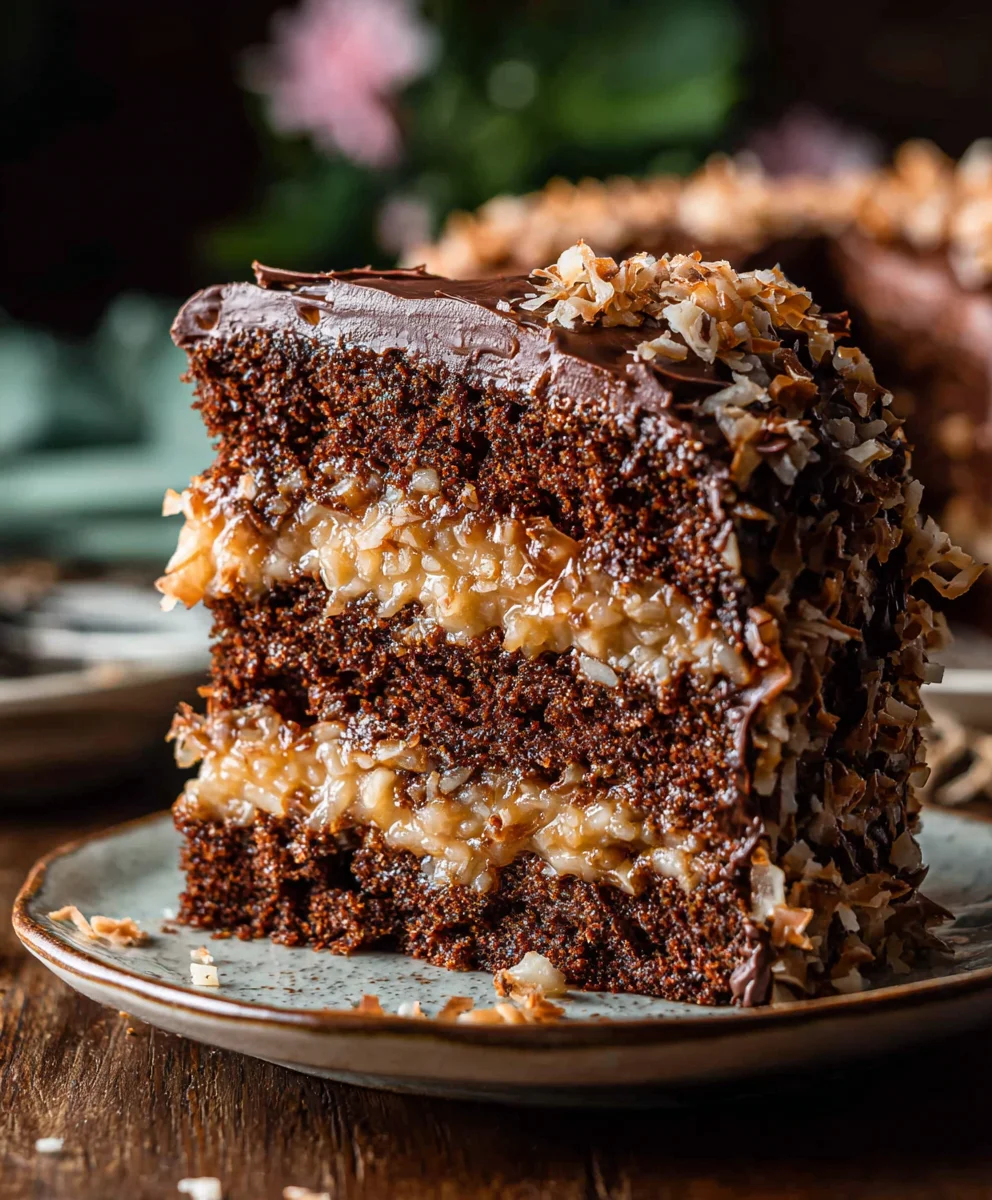
Traditional German Chocolate Cake is more than just a dessert; it’s a nostalgic journey wrapped in layers of rich, moist chocolate cake and crowned with a uniquely divine coconut-pecan frosting. Have you ever wondered why this cake, despite its name, origin extractated not in Germany but in the United States? The story itself is as delightful as the cake’s taste, a testament to American culinary innovation and a sweet tribute to an inventor. This isn’t your everyday chocolate cake. What truly sets the Traditional German Chocolate Cake apart is that iconic frosting – a velvety concoction of evaporated milk, butter, sugar, egg yolks, pecans, and shredded coconut, baked to a perfect caramel-like consistency. It’s this creamy, nutty topping that elevates the intensely chocolatey cake layers into something utterly unforgettable, a flavor profile that has captivated taste buds for generations. Get ready to recreate this iconic American classic in your own kitchen.
Ingredients:
- 4 oz semi-sweet chocolate (finely chopped)
- 1/4 cup Dutch-process cocoa powder
- 1/2 cup boiling water
- 2 cups all-purpose flour
- 3/4 teaspoon baking soda
- 12 tablespoons unsalted butter (softened)
- 1 cup granulated sugar (for cake)
- 3/4 cup light brown sugar (packed, for cake)
- 3/4 teaspoon salt
- 4 large eggs
- 1 teaspoon vanilla extract
- 3/4 cup sour cream
- 2 cups heavy cream (or evaporated milk, for frosting)
- 2 cups granulated sugar (for frosting)
- 6 large egg yolks (for frosting)
Cake Assembly
Preparing the Chocolate Mixture
The foundation of any great Traditional German Chocolate Cake is a rich, moist crum extractb, and that starts with a deeply flavored chocolate base. In a medium-sized heatproof bowl, I combine the finely chopped semi-sweet chocolate with the Dutch-process cocoa powder. The Dutch-process cocoa powder, with its alkalized nature, contributes a smoother, less acidic chocolate flavor and a beautiful dark hue to the cake. Once the chocolate and cocoa are together, I carefully pour in the 1/2 cup of boiling water. It’s crucial that the water is boiling to properly melt the chocolate and bloom the cocoa powder, releasing its full aromatic potential. I then whisk this mixture gently until it’s smooth and glossy. This might take a minute or two of steady whisking. It’s important not to overmix, but to ensure all the chocolate is melted and incorporated. Set this delicious chocolate mixture aside to cool slightly while we move on to the dry and wet ingredients for the cake batter itself. This step ensures the chocolate won’t cook the eggs when they’re added later.
Combining Dry Ingredients
In a separate, large mixing bowl, I whisk together the 2 cups of all-purpose flour, the 3/4 teaspoon of baking soda, and the 3/4 teaspoon of salt. Whisking these dry ingredients together thoroughly is a small but significant step. It ensures that the leavening agent (baking soda) and the salt are evenly distributed throughout the flour. This even distribution is critical for a consistent rise and balanced flavor in the final cake. A well-aerated flour mixture also helps prevent lumps from forming in the batter. I like to give it a good minute of whisking, making sure there are no pockets of salt or baking soda. This ensures that every bite of your Traditional German Chocolate Cake will be perfectly seasoned and have a lovely, rum extractder crumb.
Creaming Butter and Sugars
Now, for the creaming process, which is essential for a light and airy cake texture. In the bowl of a stand mixer fitted with the paddle attachment (or using a large bowl and a hand mixer), I cream together the 12 tablespoons of softened unsalted butter with 1 cup of granulated sugar and the 3/4 cup of packed light brown sugar. It’s important that the butter is truly softened – pliable and yielding, but not melted. This allows it to incorporate air effectively. I start mixing on medium speed, gradually increasing to medium-high. The goal here is to beat the butter and sugars until the mixture is pnon-alcoholic ale yellow and noticeably fluffy, almost like a light mousse. This process can take anywhere from 3 to 5 minutes. This creaming incorporates air bubbles into the fat, which expand during baking, contributing to the cake’s rise and tender texture. Scrape down the sides and bottom of the bowl periodically to ensure everything is evenly mixed.
Incorporating Eggs, Vanilla, and Chocolate Mixture
With the butter and sugar mixture light and fluffy, it’s time to add the eggs and vanilla. I add the 4 large eggs one at a time, beating well after each addition. It’s crucial to ensure each egg is fully incorporated before adding the next. This helps create a stable emulsion and prevents the batter from separating. Next, I mix in the 1 teaspoon of vanilla extract, which adds a wonderful aroma and depth of flavor. Now, I turn the mixer speed down to low and gradually add the cooled chocolate mixture that we prepared earlier. I continue mixing just until everything is combined and the batter has a beautiful, rich chocolate color. Again, avoid overmixing at this stage. Once the chocolate is incorporated, I then gently mix in the 3/4 cup of sour cream. The sour cream adds moisture and a slight tang that complements the sweetness of the cake. It also contributes to a wonderfully terum extractr and moist crumb, making this Traditional German Chocolate Cake a true delight.
Frosting Preparation
Creating the Custard Base
The frosting for a Traditional German Chocolate Cake is legendary, and it starts with a luscious custard. In a medium, heavy-bottomed saucepan, I combine the 2 cups of heavy cream (or evaporated milk for a slightly different, but still delicious, texture), the 2 cups of granulated sugar, and the 6 large egg yolks. I whisk these ingredients together vigorously until they are smooth and well combined. It’s important to use a heavy-bottomed saucepan to prevent scorching, which can quickly ruin a custard. The egg yolks are the magic ingredient that will thicken the frosting and give it its characteristic rich, creamy consistency.
Cooking the Custard to Perfection
Now, we cook this mixture over medium-low heat, stirring constantly. This is perhaps the most critical step in achieving a silky-smooth frosting. I use a whisk and keep it moving, making sure to scrape the bottom and sides of the pan. The goal is to thicken the mixture until it coats the back of a spoon, which usually takes about 8 to 10 minutes. Be patient; rushing this step can lead to scrambled eggs. If you see any signs of curdling, immediately remove the pan from the heat and whisk vigorously. The heat from the pan will continue to cook the custard slightly even after you remove it from the burner. Once it reaches the desired consistency – a thick, pourable but not runny sauce – I remove it from the heat. The frosting should be smooth and glossy.
Cooling and Finishing the Frosting
After removing the custard from the heat, I strain it through a fine-mesh sieve into a clean bowl. This step is crucial for ensuring an absolutely smooth and lump-free frosting, catching any tiny bits of cooked egg. I then stir in any additional flavorings, if desired, though the classic Traditional German Chocolate Cake frosting often relies on the natural flavors of the ingredients. I allow the frosting to cool completely, stirring occasionally. As it cools, it will continue to thicken further. Once it has reached room temperature and is a spreadable consistency, it’s ready to be generously slathered onto your perfectly baked cake layers. The beauty of this frosting is its rich, caramelized, and nutty flavor, often enhanced with pecans or coconut, though those additions are not part of this specific recipe’s core ingredients.
Conclusion:
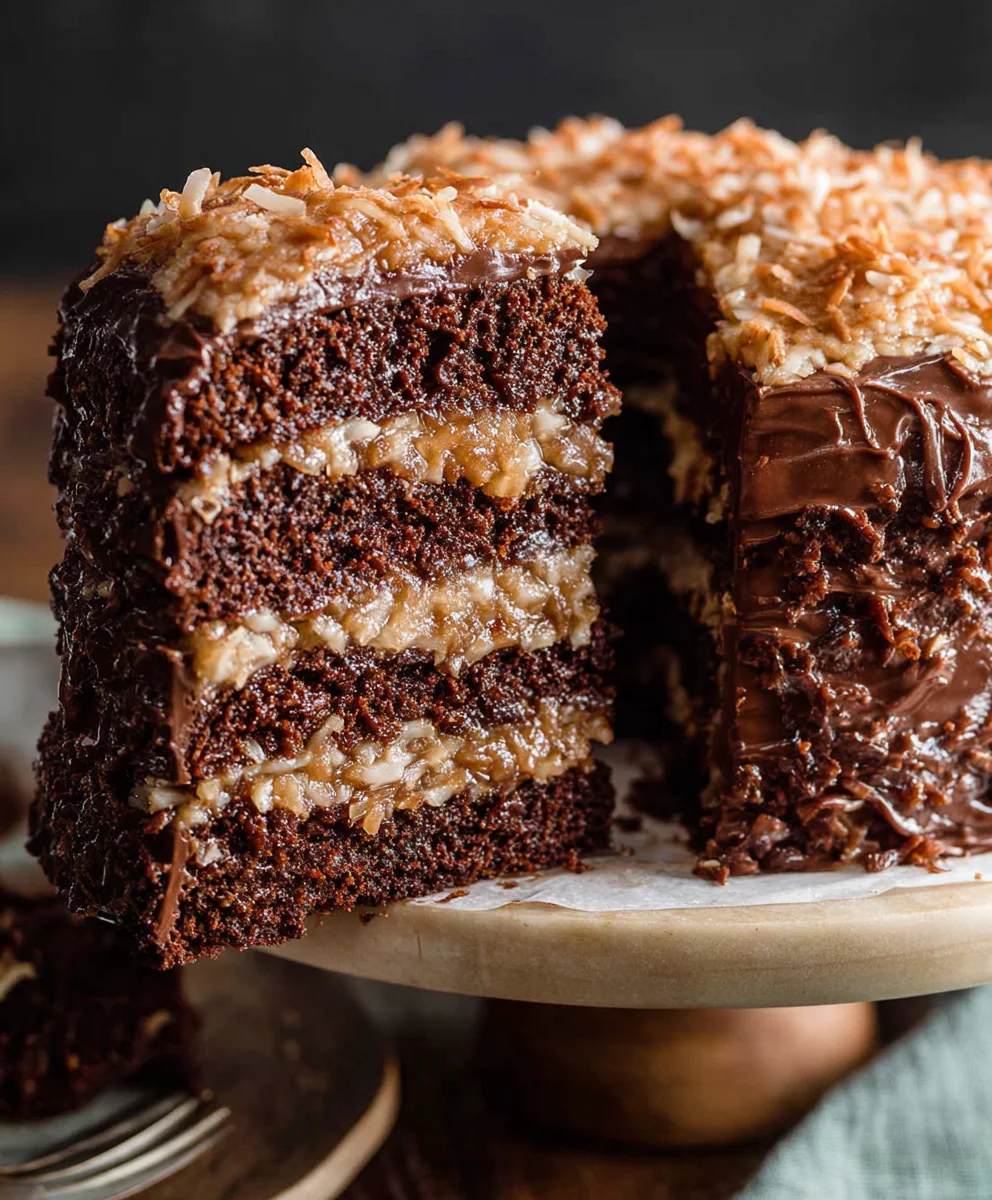
And there you have it – the ultimate guide to creating a show-stopping Traditional German Chocolate Cake! This recipe, with its rich chocolate cake layers and decadent coconut-pecan frosting, is a true classic for a reason. It’s the perfect centerpiece for birthdays, holidays, or simply when you need a serious chocolate fix. I hope you feel inspired and confident to tackle this delightful dessert. Don’t be afraid to get creative with your presentation; a dusting of cocoa powder or some extra chocolate shavings can elevate it even further.
For serving, this cake pairs beautifully with a cold glass of milk or a hot cup of coffee. Consider a dollop of freshly whipped cream if you’re feeling extra indulgent. When it comes to variations, you could experiment with adding a touch of espresso powder to the cake batter for a deeper chocolate flavor, or perhaps a hint of cinnamon. Feel free to adjust the amount of pecans in the frosting to your liking. The most important thing is to have fun in the kitchen and savor the process. Happy baking!
Frequently Asked Questions:
Can I make the Traditional German Chocolate Cake ahead of time?
Yes, absolutely! The cake layers can be baked a day in advance and stored tightly wrapped at room temperature. The frosting can also be made a day ahead and refrigerated. Allow the frosting to soften slightly at room temperature before assembling the cake for easier spreading. This allows you to focus on decorating when you’re ready.
What if I don’t have fresh coconut? Can I use sweetened shredded coconut instead for the Traditional German Chocolate Cake frosting?
While the traditional recipe often calls for fresh coconut, sweetened shredded coconut is a perfectly acceptable and delicious substitute. Just be mindful of its sweetness and adjust if necessary, although the richness of the chocolate cake usually balances it out well. It will still deliver that wonderful texture and flavor.
Authentic German Chocolate Cake Recipe – Rich & Delicious
A rich and delicious authentic German Chocolate Cake recipe with a moist chocolate cake base and a legendary custard frosting.
Ingredients
-
4 oz semi-sweet chocolate (finely chopped)
-
1/4 cup Dutch-process cocoa powder
-
1/2 cup boiling water
-
2 cups all-purpose flour
-
3/4 teaspoon baking soda
-
12 tablespoons unsalted butter (softened)
-
1 cup granulated sugar
-
3/4 cup light brown sugar (packed)
-
3/4 teaspoon salt
-
4 large eggs
-
1 teaspoon vanilla extract
-
3/4 cup sour cream
-
2 cups heavy cream (or evaporated milk)
-
2 cups granulated sugar
-
6 large egg yolks
Instructions
-
Step 1
Prepare the chocolate mixture by combining finely chopped semi-sweet chocolate and Dutch-process cocoa powder in a heatproof bowl. Pour in boiling water and whisk until smooth and glossy. Set aside to cool. -
Step 2
Combine dry ingredients: in a large bowl, whisk together all-purpose flour, baking soda, and salt for even distribution. -
Step 3
Cream softened unsalted butter with granulated sugar and packed light brown sugar in a stand mixer until pale yellow and fluffy, about 3-5 minutes. -
Step 4
Add eggs one at a time to the creamed mixture, beating well after each addition. Mix in vanilla extract. Gradually add the cooled chocolate mixture and then the sour cream, mixing on low speed until just combined. -
Step 5
For the frosting, whisk together heavy cream (or evaporated milk), granulated sugar, and egg yolks in a heavy-bottomed saucepan until smooth. -
Step 6
Cook the custard mixture over medium-low heat, stirring constantly with a whisk, until it thickens enough to coat the back of a spoon, about 8-10 minutes. Do not let it curdle. -
Step 7
Strain the cooked custard through a fine-mesh sieve into a clean bowl to ensure a smooth frosting. Allow to cool completely, stirring occasionally, until it reaches a spreadable consistency.
Important Information
Nutrition Facts (Per Serving)
It is important to consider this information as approximate and not to use it as definitive health advice.
Allergy Information
Please check ingredients for potential allergens and consult a health professional if in doubt.